고정 헤더 영역
상세 컨텐츠
본문
반응형

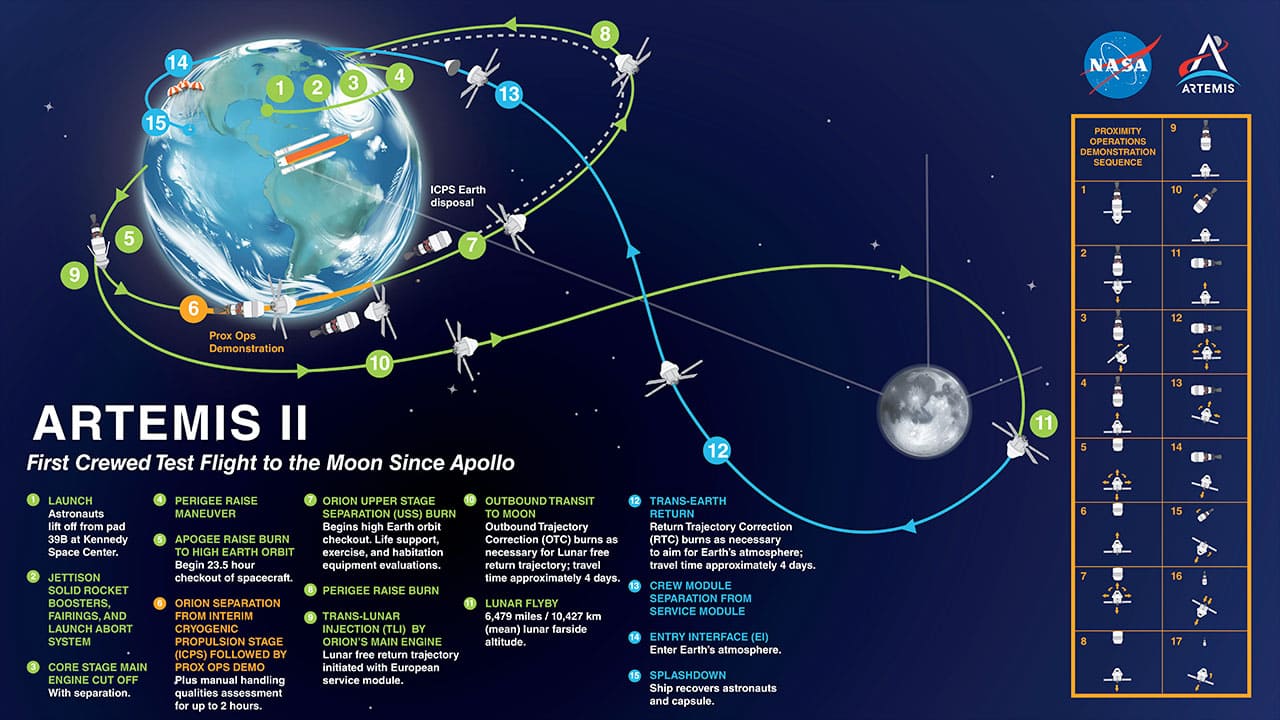
Four astronauts beginning a 10-day mission in lunar orbit is, on its face, a straightforward milestone—but it is also the kind of event that reveals what spaceflight is really built on: precision, continuity, and risk-managed patience. CNN’s video framing—covering the start of Artemis II—signals not spectacle, but the transition from planning to execution: the moment where intent becomes trajectory.
1) Lunar orbit is a “systems test” dressed as exploration
A 10-day circumlunar mission is not just about seeing the Moon again. It is about validating the full choreography that future missions will rely on: navigation accuracy, spacecraft operations, crew procedures, and the ability to maintain performance over multiple days in a high-stakes environment. The longer you plan for real timelines, the less you can rely on improvisation—so orbital missions function as a controlled proving ground.
2) Four astronauts: the human variable is part of the engineering
CNN’s emphasis on four crew members matters because it highlights redundancy and teamwork. In missions like Artemis II, the crew is not a passenger system. They are active operators, responsible for monitoring, executing procedures, and troubleshooting—often under constraints that are less visible to the public than the rocket-launch moment.
That is why a “short” mission can still be demanding: it compresses the amount of time available to confirm that everyone and everything behaves as expected.
3) The launch is the opening note; the mission is the music
The public tends to treat launches as the endpoint. But in reality, the mission begins immediately after liftoff—when orbital insertion, mission timing, and trajectory corrections determine whether the plan remains intact. CNN’s segment from the launch site reinforces that narrative: today’s story is what happens at departure, yet the meaningful test is what the spacecraft and crew can sustain over the coming days.
4) Why this matters now: Artemis as an iterative program
Artemis is best understood as a program that advances by demonstrating repeatable capability, not by achieving a single heroic moment. A lunar-orbit mission that proceeds smoothly contributes directly to that repeatability—building confidence for subsequent, more complex phases.
Conclusion
This 10-day lunar-orbit initiation is not merely the next entry in NASA’s calendar. It is a deliberate step in turning ambition into operational reliability. If you want the takeaway in one line: Artemis II begins with a launch, but it truly succeeds by proving that the crew and systems can execute flawlessly after the cameras turn off.


반응형


