고정 헤더 영역
상세 컨텐츠
본문
반응형

Arizona’s path to the Final Four is no longer a storyline—it looks like a forecast. And yet, the NCAA tournament’s beauty (and cruelty) is that “favorite” does not mean “untouchable.” The Yahoo Sports takeaway frames it precisely this way: Arizona’s surge is credible, but the real question is whether the bracket’s most formidable challengers—particularly Texas on the men’s side and South Carolina on the women’s side—can be stopped, or whether their momentum is simply being underestimated.
Arizona: the favorite label now has evidence
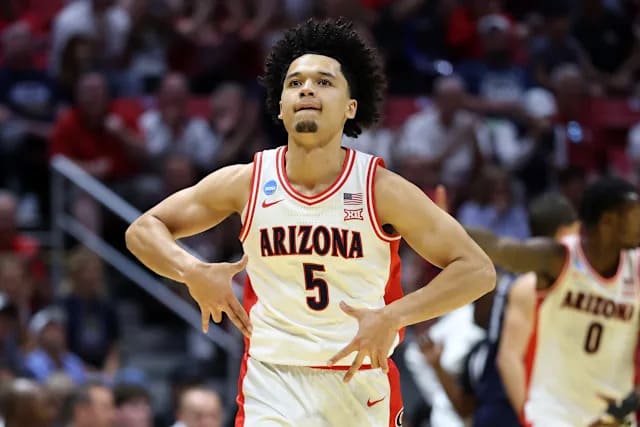
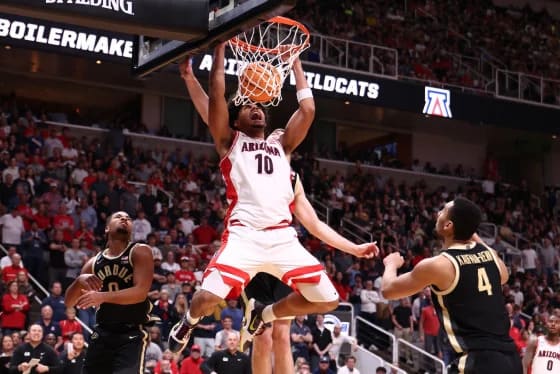
Arizona earned its Final Four credibility with a statement win over Purdue. The article emphasizes that the Wildcats didn’t just outscore the Boilermakers—they widened the game in the second half, turning a halftime situation into a controlled runaway (79–64). That shift is important in March: the teams that travel deepest are usually the ones that adjust, not merely the ones that shoot well for a half.
Several details reinforce why Arizona reads as the tournament’s likeliest “cut-down-the-nets” team:
Balanced scoring and efficiency (79 points on 58 shots, 15 assists vs. 6 turnovers).
A defensive profile that mattered immediately (Purdue limited to 38% shooting).
Fresh, scalable offensive production, highlighted by standout freshman Koa Peat leading multiple starters in double figures.
If Arizona’s offense can move the ball cleanly while its defense shrinks open looks, it becomes the kind of opponent who forces others to win via contested, low-percentage stretches—an unsatisfying task for any contender.
Texas: the question is whether they arrive “ready,” not “good”
Texas is positioned as a legitimate Final Four contender in the same takeaway ecosystem, but the key issue is not talent—it’s timing and match-up execution. The article situates Texas as a team emerging from a dominant run (including a blowout over Kentucky in the Sweet 16), and it underlines a theme typical of championship paths: elite teams don’t merely win; they start aggressively and impose their tempo early.
In this tournament structure, that matters against a style like Arizona’s. If Texas can keep games from becoming half-court chess matches—if it forces Arizona into a chase—then “favorite” becomes negotiable. But if Arizona does what it did to Purdue—limit shooting quality and punish careless sequences—Texas may find that even its best starts can be slowly compressed into a smaller margin than expected.
South Carolina women: momentum that looks hard to interrupt
On the women’s side, the takeaway is even more pointed. South Carolina appears to be operating at a different decibel level, overwhelming Oklahoma 94–68 with a decisive early burst (a 10–0 start) and essentially never conceding the psychological advantage. This isn’t just a win; it’s a control performance.
The article also makes clear that South Carolina’s structure travels:
It won via the backcourt, with Ta’Niya Latson scoring 28 and distributing five assists while hitting all four threes and all ten free throws.
Raven Johnson added 18 points and three assists.
The broader marker: South Carolina recorded a dominant form of the game before Oklahoma could even fully “play its own” contest.
In short, if an opponent can’t slow the engine early—and if South Carolina’s shooting and free-throw conversion remain reliable—then “stop them” turns into “outperform them,” which is a rarer instruction than fans like to believe.
Can they be stopped? Yes—if the tournament delivers the right kind of disruption
The takeaway, read between the lines, is that stopping these teams won’t come from one magic adjustment. It will require a combination of:
Early control (especially against teams like South Carolina that punish slow starts),
Avoiding turnovers and rushed possessions (Arizona punished Purdue’s efficiency gaps),
Sustaining defensive intensity long enough to survive the adjustments.
March Madness rarely rewards a single-plan team. It rewards the one that can survive momentum swings. Arizona looks built for that. Texas looks built to make the physical, tempo-driven case. South Carolina, meanwhile, looks built to overwhelm opponents before doubt can take hold.
Bottom line
Arizona’s case for the Final Four is persuasive because it’s performance-based: second-half adjustments, defensive constraint, and efficient play-making. Texas and South Carolina represent the tournament’s real stress tests—because they don’t just contend, they impose. Whether either can “stop” the leaders depends less on reputation than on execution under the specific pressure of the next matchup.
If you tell me which angle you prefer—more tactical (matchups/styles) or more narrative (momentum, pressure, bracket dynamics)—I can tighten the commentary further.

반응형


