고정 헤더 영역
상세 컨텐츠
본문
반응형
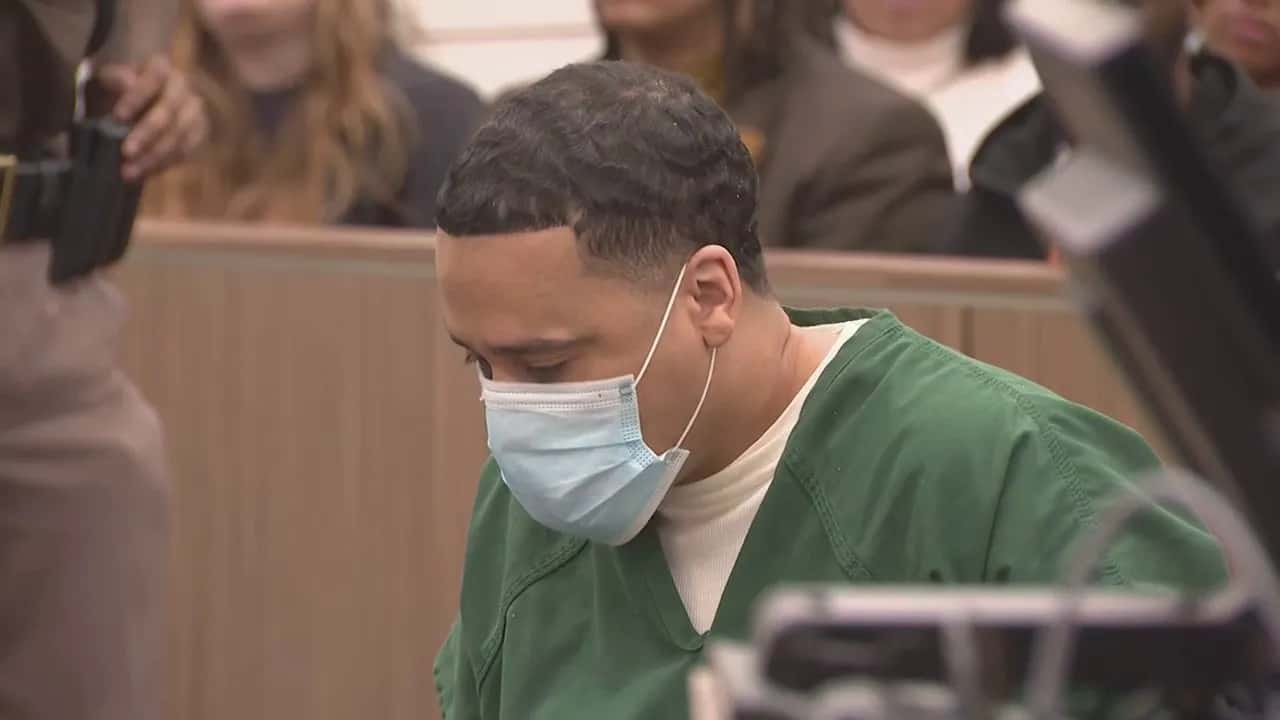
The news that Jarvis Butts died in prison only weeks after being sentenced for the murder of 13-year-old Na’Ziyah Harris and for sexually assaulting other children is not merely a criminal-justice update. It is an event with moral weight and community impact—one that inevitably raises questions about accountability, closure for survivors and families, and the limits of what the justice system can provide once a life is taken inside custody.
According to FOX 2 Detroit, the Michigan Department of Corrections confirmed Butts died at the Charles Egeler Reception and Guidance Center in Jackson. The report states that Michigan State Police are investigating the death, and that it is being reported as a suicide, with MDOC officials saying staff attempted life-saving measures that were unsuccessful.
A sentencing still “in motion”
What makes this case especially unsettling is timing. Butts’ sentence—described as 35–60 years for second-degree murder, alongside additional prison terms for sexual assault crimes involving children—was handed down only two weeks earlier. In other words, the period in which the sentence was supposed to begin its corrective arc for public safety and the administration of justice became abruptly truncated by death.
This is not to suggest the outcome should be interpreted as either redemption or absolution. The report makes clear that Butts pleaded guilty and was convicted in relation to Harris’ killing and the sexual assaults. Rather, the issue is procedural and human: when a defendant dies shortly after sentencing, investigations into the circumstances of death become consequential, because they can shape what the public concludes about custody, risk management, and institutional responsibility.
The family’s search for closure
The FOX 2 report emphasizes that an important component of the plea agreement was providing information about Harris’ body location to her family—framed as crucial for closure. When the accused dies soon after sentencing, the family’s experience can feel both momentarily “completed” by disclosure and perpetually “unresolved” because the broader moral and emotional accounting of a child’s death can never truly be finished on a legal timetable.
In cases like this, closure is often less a legal endpoint and more an ongoing process—one made harder when another death occurs, even if it is investigated promptly.
What the public can reasonably expect next
Given the report’s indication that state police are investigating, the next phase should focus on facts: the custody circumstances surrounding the death, the timeline of medical and supervisory responses, and whether protocols functioned as intended. The public’s expectation should be straightforward: clarity without spectacle, truth without delay.
Conclusion
Butts’ death in custody, reported as suicide, is a final turn in a story that began with grave harm to children and ended with a sentence that lasted only weeks before it was cut short. For Harris’ family and the community, this is not closure in the usual sense—only a new chapter of questions. And for the justice system, it underscores the solemn duty of institutions to ensure that once a person is under their control, safety, transparency, and accountability are not optional, but foundational.


반응형
'Noise' 카테고리의 다른 글
| Tiger Woods: The Arrest That Reorders the Future (1) | 2026.03.28 |
|---|---|
| Sony’s decision to raise PS5 prices by $100 (0) | 2026.03.28 |
| Musk’s xAI “Doubling Down” on AI Videos After OpenAI Halts Sora: Competition, Momentum, and the New Arms Race (0) | 2026.03.26 |
| “Hannah Montana 20th Anniversary Special” (0) | 2026.03.25 |
| LaGuardia Crash Investigation: What the Next Questions Will Target (0) | 2026.03.24 |


