고정 헤더 영역

상세 컨텐츠
본문 제목
The Women’s Tournament Returns: Early Drama, Individual Brilliance, and the Weight of Expectations
본문
반응형
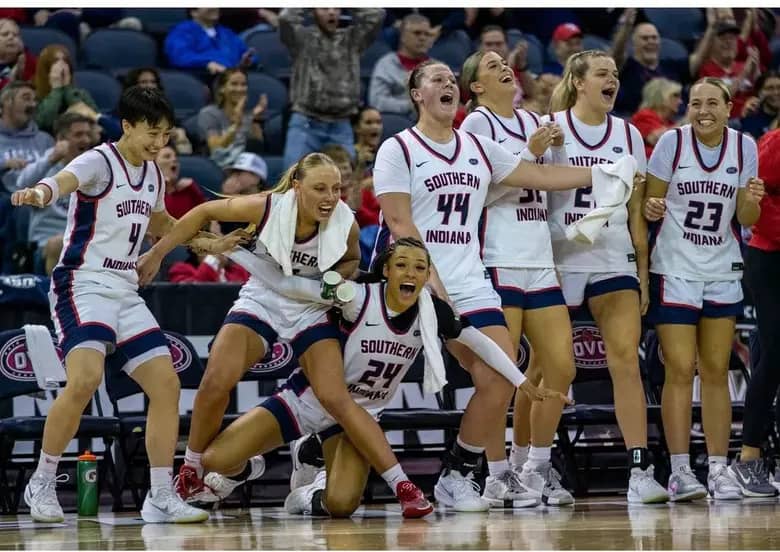
The 2026 NCAA Women’s Basketball Tournament has begun with a familiar blend of predictability and spectacle: top teams asserting their dominance, mid‑majors seizing moments, and standout individual performances reminding us why this event commands growing national attention.
At the top of the bracket sits UConn — the No. 1 overall seed, defending champion and bearer of an undefeated record and a 50‑game win streak. That status matters. Nearly half of bracket‑challenge entrants peg the Huskies to repeat; with good reason, they remain the benchmark for excellence in the women’s game. Yet the tournament’s opening rounds underscored a broader truth: dominance on paper still requires daily execution. Even elite programs must translate depth and talent into focus for single‑elimination survival.
Individual feats have punctuated the early slate. Olivia Miles’ historic triple‑double performance was the kind of statistical outburst that reshapes narratives and raises the stakes for opponents. Such achievements not only underline a player’s elite skill set but also crystallize what separates championship contenders from pretenders: the capacity to influence all facets of the game — scoring, playmaking and rebounding — on the sport’s biggest stage.
High seeds largely advanced as expected, with powerhouse programs like Duke demonstrating balanced depth and offensive firepower in opening wins. Yet the tournament’s architecture — the proximity of 8/9 tossups, the presence of seasoned mid‑majors and the First Four’s late entrants — preserves the possibility of early upsets that can instantly reroute regional storylines. March remains, by design, both an affirmation of regular‑season excellence and an invitation to the unpredictable.
Strategically, we are watching a subtle evolution in the women’s game. Coaches increasingly emphasize spacing, pace and roster versatility; teams that can defend multiple lineups and manufacture efficient offense without relying solely on one superstar will be better equipped for the attrition of successive knockout rounds. Conversely, programs with a transcendent scorer or an all‑around floor general can, by themselves, tilt close games — and the tournament has already produced moments where one player’s performance decided outcomes.
Beyond the scoreboard, the tournament marks a cultural moment. Viewership and fan engagement for women’s college basketball continue to rise, and the tournament’s competitive parity strengthens the case for broader investment in women’s athletics. The front‑end excitement — packed arenas, triple‑double headlines, and the narratives of underdogs fighting for recognition — signals that the sport’s momentum is structural, not episodic.
Finally, the psychological dimension cannot be overstated. For favored teams like UConn, the challenge is to manage expectation and pressure; for lower seeds, it is to embrace the opportunity and play without historic baggage. Coaches who can calibrate mentality — keeping veterans composed and younger players free — will often find themselves with the clearest path forward.
In short, the 2026 Women’s Tournament’s opening act has delivered the elements that make March compelling: elite teams staking claims, individuals producing defining moments, and the ever‑present possibility that a single upset will rewrite a region. As the field narrows toward Phoenix, the tournament will test depth, adaptability and resolve — and, as always, reward those who rise to the moment.
반응형


