고정 헤더 영역
상세 컨텐츠
본문 제목
Musk’s xAI “Doubling Down” on AI Videos After OpenAI Halts Sora: Competition, Momentum, and the New Arms Race
본문
반응형
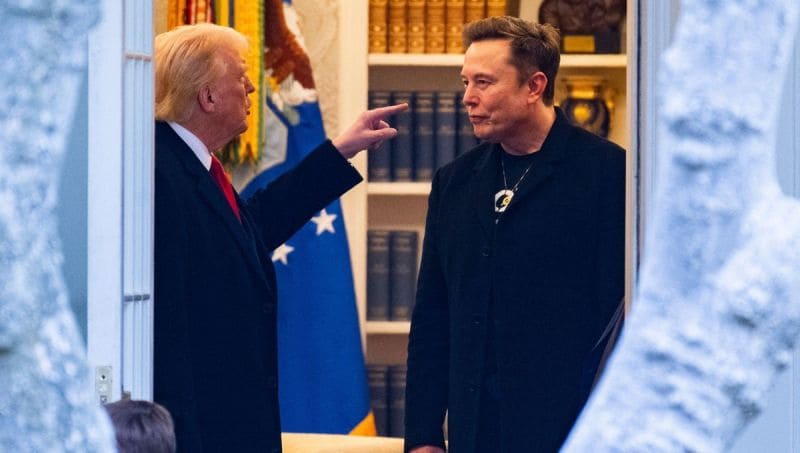
Elon Musk’s message following OpenAI’s discontinuation of Sora is unmistakably competitive: xAI is moving to upgrade its AI video generator, framing the moment as an opening to seize rather than an obstacle to absorb. In Bloomberg’s report, Musk says the “next Grok Imagine release will be epic” and that the company is “doubling down,” accompanied by AI-generated videos shared alongside the announcement.
What’s striking here is not simply the decision to accelerate product development—it’s the strategic use of rivals’ setbacks as market signals. In the AI era, “pause” rarely reads as neutral. When OpenAI discontinues a flagship video tool, it becomes an ecosystem event: developers, creators, and investors instantly reassess where capability is concentrating, which interfaces are becoming defaults, and which model families are positioned to attract attention and usage next. Musk’s response therefore reads as both technological and performative—a statement aimed at shaping perception as quickly as software.
From models to products: video as the next battleground
Bloomberg’s account highlights xAI’s push to upgrade its video creation capacity through Grok Imagine. This implies a broader industry shift: competitiveness is moving from raw model performance to product velocity and user-facing experiences. Video generation is harder than text and often more brittle—requiring coherence, temporal consistency, and the ability to satisfy creator workflows. That difficulty is precisely why it matters: teams that solve it demonstrate not only intelligence, but engineering stamina.
“Doubling down” as a signal to the market
Musk’s phrasing is deliberately forceful. In business terms, it’s a commitment device: a public declaration that xAI will not merely respond to uncertainty, but reframe it as momentum. Such statements can matter commercially because they influence narrative—media coverage, developer curiosity, and partner interest—sometimes before the underlying capability is demonstrably superior. Whether or not the next release is “epic,” the announcement helps xAI occupy the center of the story.
Rivalry reshapes the tempo of innovation
OpenAI nixes Sora, and xAI reacts within days. That tempo tells us something about the current market dynamics: the AI “frontier” is no longer paced only by internal roadmaps; it is increasingly governed by a competitive calendar. Companies are incentivized to treat external events as catalysts—because if they don’t, the space they care about may be filled by whoever moves first.
The underlying question: who owns the creative interface?
The practical issue is not only whether video generation improves, but which ecosystem becomes the most convenient “creative interface” for everyday users and professional studios alike. If xAI’s upgrade meaningfully improves controllability, quality, or speed, it can convert casual interest into habit. If it fails to close the gap, the announcement may still have value as marketing—but video generation is unforgiving: users quickly notice when outputs are inconsistent or hard to direct.
Bloomberg’s report suggests that xAI is interpreting Sora’s discontinuation not as a winding-down of the video race, but as a moment to intensify it. Musk’s “doubling down” is best understood as a bid for both technological leadership and narrative dominance—an effort to ensure that when the public asks “what’s next in AI video,” the answer points to xAI.
If you want, I can also draft a shorter commentary (150–200 words) in a more op-ed style, or a more policy-focused one that discusses safety, reliability, and governance implications of accelerating AI video deployment.

반응형
'Noise' 카테고리의 다른 글
| Sony’s decision to raise PS5 prices by $100 (0) | 2026.03.28 |
|---|---|
| Jarvis Butts’ Prison Death: A Gruesome Timeline That Leaves Questions—and Demands Care (0) | 2026.03.27 |
| “Hannah Montana 20th Anniversary Special” (0) | 2026.03.25 |
| LaGuardia Crash Investigation: What the Next Questions Will Target (0) | 2026.03.24 |
| Robert S. Mueller III: Independence as a Public Service (0) | 2026.03.23 |


